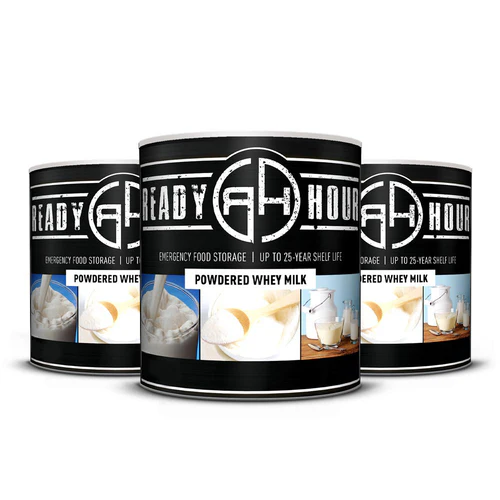
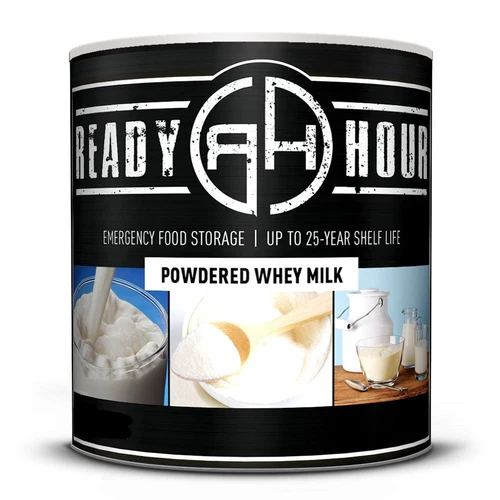

Ready Hour Powdered Whey Milk #10 can - 76 servings
Why People Choose #10 Cans
For building a durable food reserve, #10 cans make it practical to store meaningful quantities of real food with minimal maintenance. This Ready Hour Powdered Whey Milk #10 Can delivers a substantial supply of one of the hardest staples to keep on hand — real milk — in a shelf-stable form with a long shelf life, an efficient storage footprint, and true everyday usefulness, making it easy to expand your pantry, supplement your meal kits, and keep dependable dairy ready for whatever comes.
Fresh milk spoils in days and needs constant refrigeration — this doesn't. Just add water and stir for a creamy glass of milk any time, or use it exactly as you'd use dairy: in cereal, coffee, baking, smoothies, and protein shakes. Kids love the flavor, and many customers find it tastes cleaner than the milk powder on grocery shelves. You can even adjust the water to make it richer (whole) or lighter (2%). One 8 oz glass delivers about 15% of the daily value for vitamin D, 10% for calcium, and 6% for potassium — real nutrition that stores for decades.
Key Decision Factors
The practical details most people compare when choosing long-term storage foods:
- Calories: 6,840 total per can
- Servings: 76 servings per can (2 Tbsp per serving)
- Protein: 228 grams total per can
- Shelf Life: Up to 25 years unopened; up to 1 year once opened*
- Preparation: Just add water and stir — about 4.8 gallons to prepare the full can
- Ingredient Type: Shelf-stable dairy — drink, baking staple, and recipe ingredient
- Packaging: Sealed steel #10 can with oxygen absorbers — waterproof and rugged
- Storage Efficiency: Large-volume format — about 5× more than a standard grocery-store can
- Net Weight: 56 oz (3 lb 7.55 oz) / 1.59 kg
- Use Flexibility: Drinkable milk, cooking ingredient, baking staple, and smoothie or shake base
- Made in the U.S.A.
How #10 Cans Fit Into a Food Storage Plan
#10 cans make it easier to strengthen your supply over time by adding dependable staple foods exactly where you need them:
- Extend your meal kits by adding extra servings of key ingredients
- Build redundancy in staples so you're not relying on a single source of food
- Customize your storage around the foods your household actually uses
- Add depth gradually, instead of committing to one large purchase all at once
#10 Cans vs. Grocery Store Cans: What's the Real Difference?
Grocery-store cans are built for short-term pantry use. #10 cans are built for long-term food storage. The difference isn't just size — it's how long they last, how much they hold, and how reliably they support real preparedness planning.
- Built for decades, not rotation: Grocery cans are meant to be used within a few years. Properly stored #10 cans stay sealed until you need them.
- More food, fewer units: Each #10 can holds far more than standard retail cans — more efficient for storing meaningful quantities.
- Storage-grade packaging: Oxygen absorbers and durable steel sealing help protect food from air, light, and moisture over the long haul.
- Designed for preparedness: Grocery cans keep meals on hand. #10 cans help you build a supply you can count on if stores aren't an option.
Preparation & Storage Notes
#10 cans are designed for long-term storage, but proper handling helps you get the most value once they're opened or put into use:
- Store in a cool, dry location to maintain maximum shelf life
- Keep unopened cans sealed until needed to preserve freshness and quality
- Once opened, transfer contents to an airtight container and use within one year
- Follow the preparation instructions on the label, as some foods require cooking or hydration
Disclaimers & Notes
*It's best to store this emergency food in a dry, cool location — a dark area, if possible — at temperatures between 55°F and 70°F. Actual shelf life may vary based on individual storage conditions.
Allergen alert: Contains milk (dairy) and soy. Note: because whey is a by-product of the cheesemaking process, this product contains lactose. The amount is small, and some lactose-sensitive people are able to tolerate it — but those with dairy or soy allergies should not consume it.
More from this category
- EMERGENCY FOOD
 Ready Hour Freeze-Dried Sliced Strawberries #10 can (36 servings)Ready Hour Freeze-Dried Sliced Strawberries #10 Can: real strawberry slices, eat dry or rehydrate. 30-year shelf life, no refrigeration. Long-term food storage.$39.99 fromView
 - EMERGENCY FOOD
 Ready Hour Quick Oats #10 can -30-Year Shelf Life for Emergency Food StorageReady Hour Quick Oats #10 Can: 22 servings of whole grain oats, ready in under 5 minutes. 30-year shelf life, no refrigeration. Bulk emergency food storage staple.$14.99 fromView
 - SURVIVAL GEAR
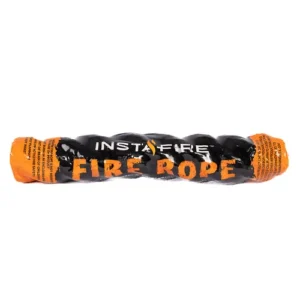 Fire Rope Fire Starter by InstaFire
InstaFire Fire Rope: waterproof, windproof tinder rope that lights ~50 fires and burns up to 4.5 hours. Cigar-sized, 100-year shelf life. Cut what you need, save the rest.
$9.95 fromView